Warden
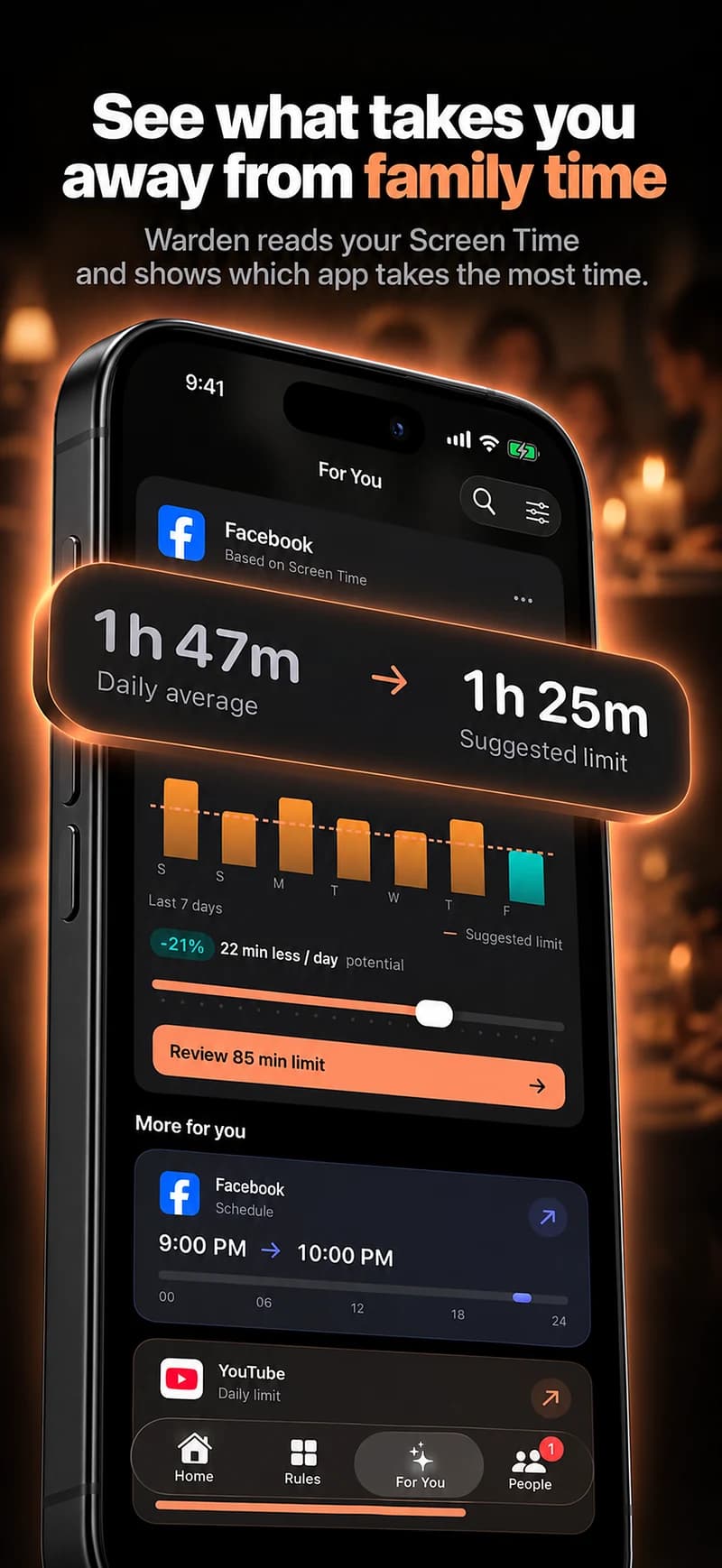
Start with a clear invitation
Ask whether everyone wants a meal without feeds or whether there are reasons to remain reachable. A person may be on call, caring for someone or using an accessibility tool. You do not need their private details to make room for an exception.
A useful invitation is “Can we leave social apps alone while we eat?” rather than putting another person’s phone in a pile without asking. Define the shared time instead of imposing a rule for the whole evening.
Avoid penalties that change the agreement
A phone-stacking game sometimes attaches a cost to checking. That makes participation a different decision from simply putting a device away. Do not assume everyone is comfortable with money, public scoring or being questioned about a necessary call.
You can choose the same uninterrupted meal without a penalty. Keep devices accessible when needed and let people explain a brief check without turning the table into an enforcement process.
Use a routine only when it reduces effort
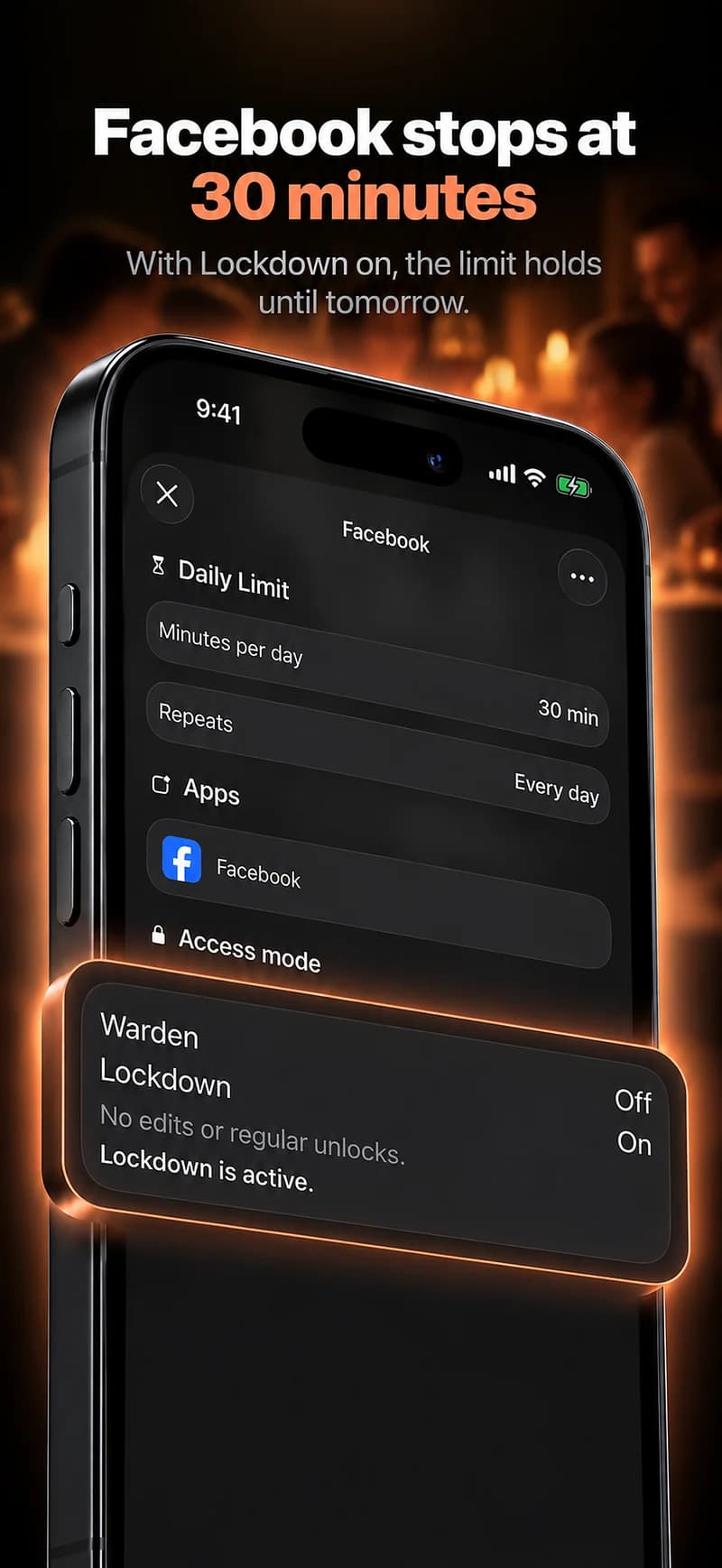
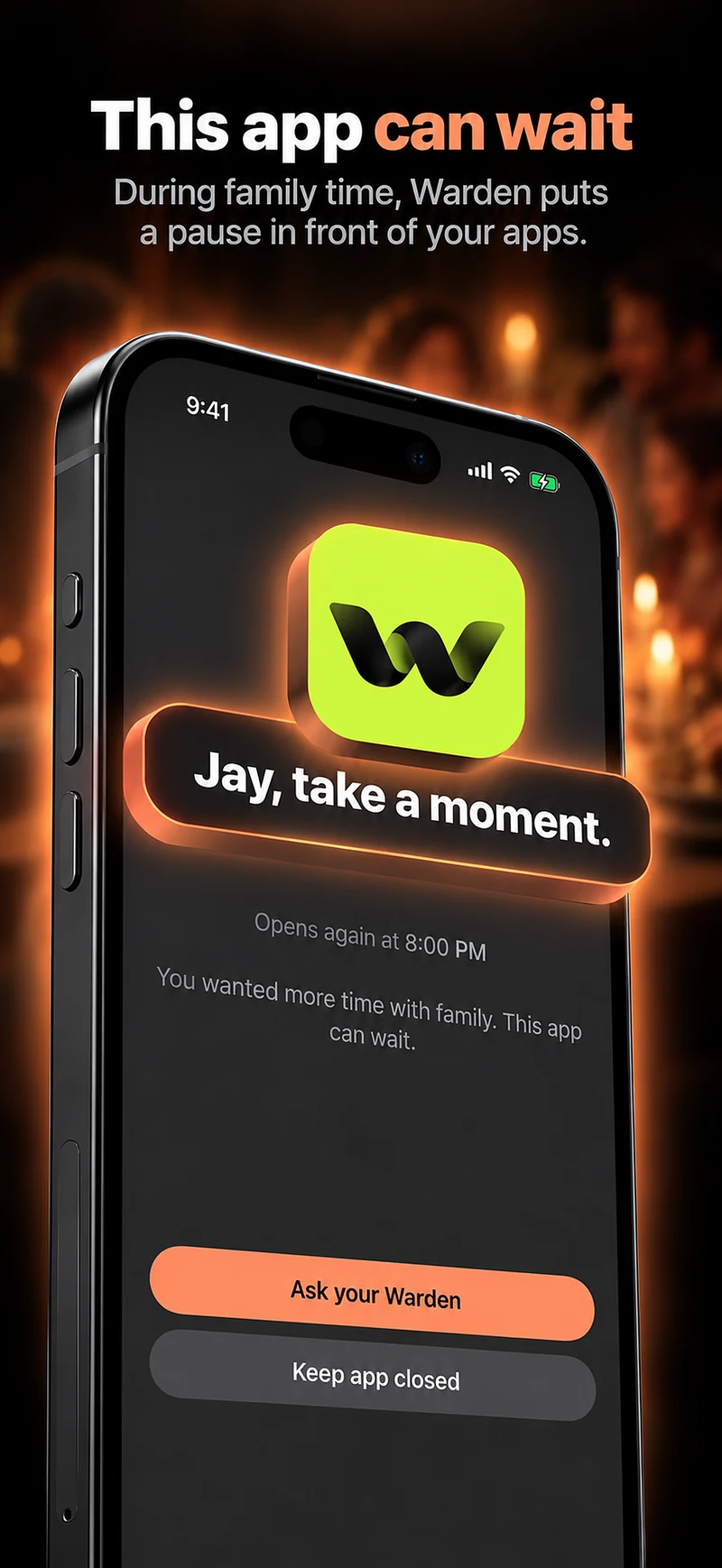
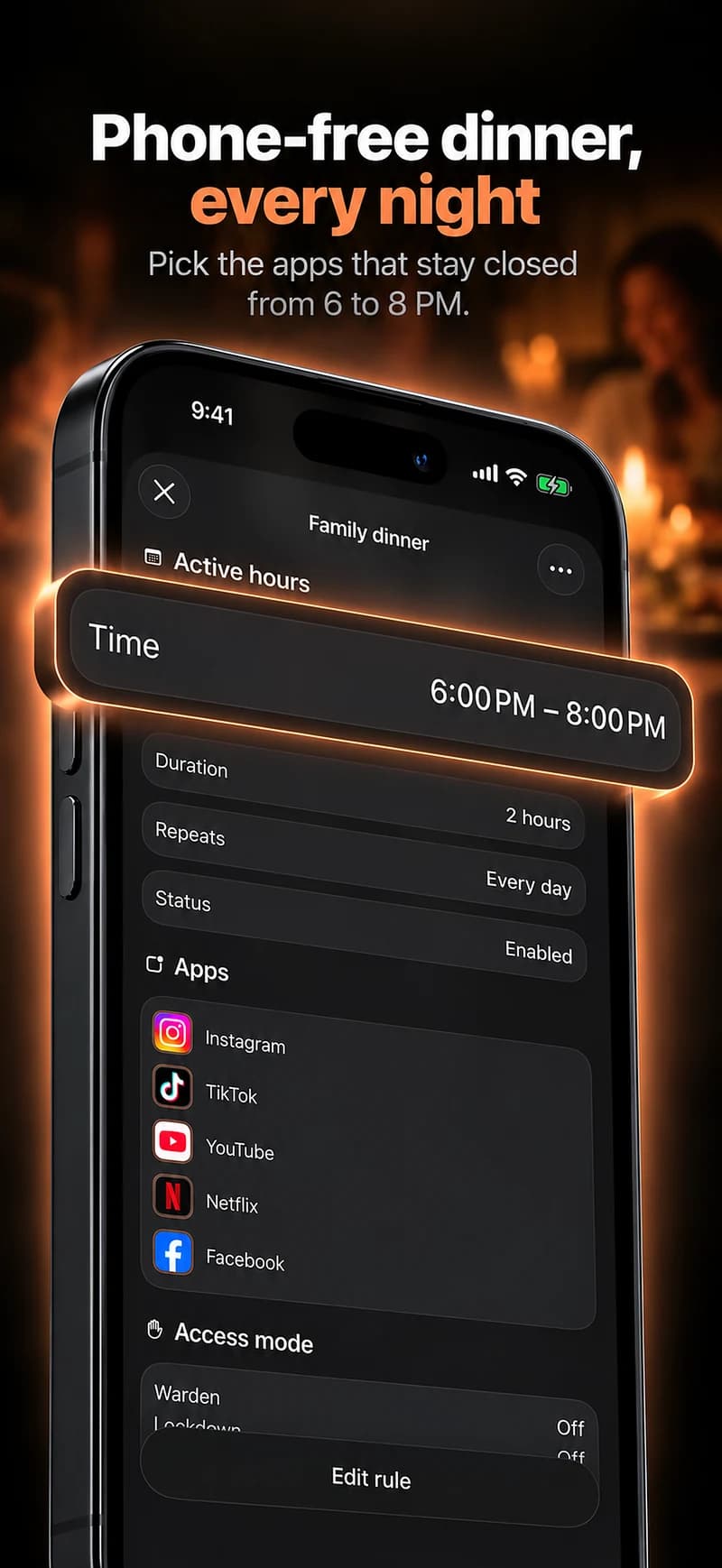
For a regular household meal, a recurring block on selected feeds may remove the need to remember a setting each night. Choose actual dinner hours and leave essential communication available. A one-off focus session may fit an occasional meal better.
An app is optional. A shared charging spot or putting the phone out of immediate reach may already do enough. Warden should support a chosen moment, not turn a simple meal into a long setup exercise.
Decide what you want after the meal
If the arrangement helped, discuss whether to repeat it. The useful outcome may be a conversation you enjoyed, not a reduction in the whole day’s phone use. There is no need to extend the rule automatically to everyone’s private time afterward.
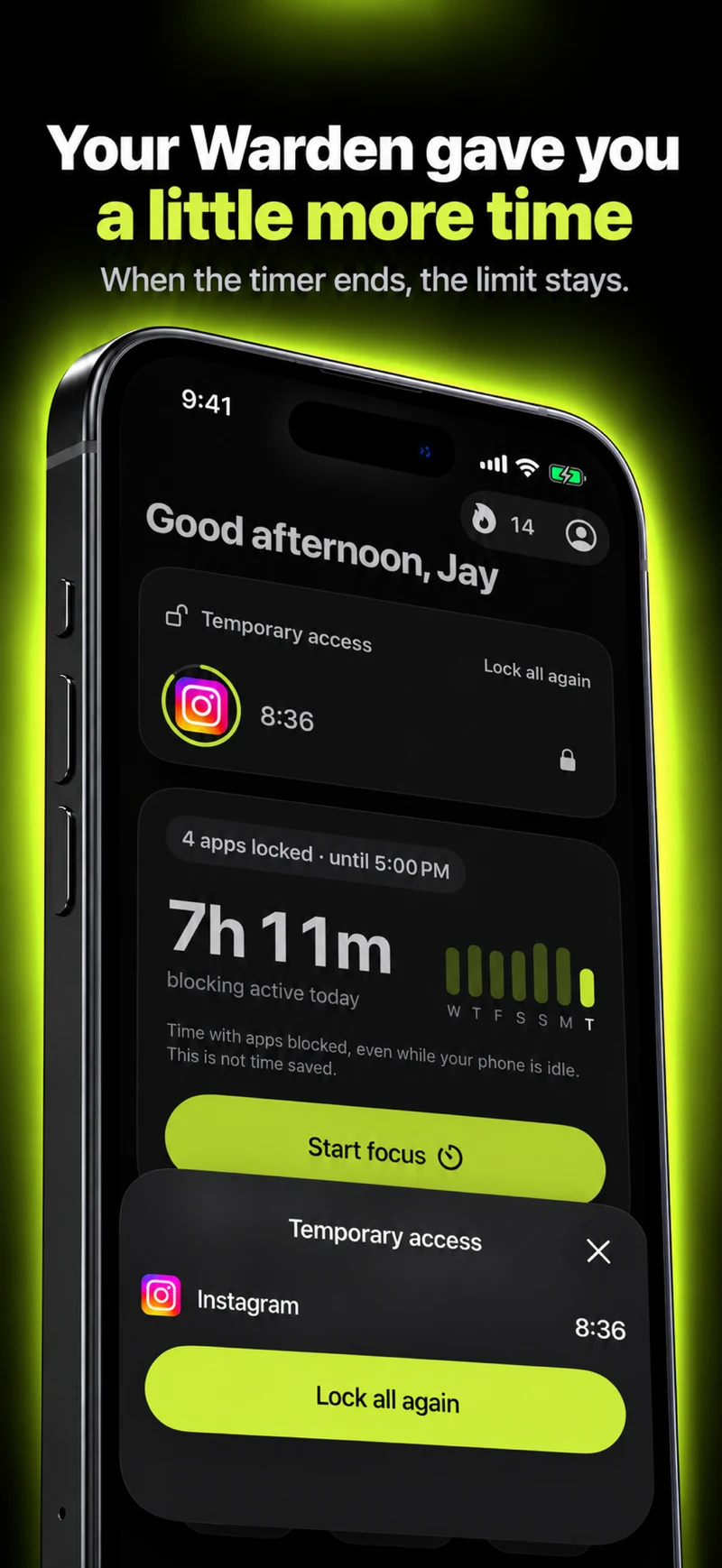
Recorded protection can show when a block was active, but it cannot confirm that dinner happened or that anyone was more present. Keep that judgment with the people at the table and adjust the plan when routines change.
Make the dinner arrangement easy to understand
Choose a meal everyone has agreed to share, then decide whether phones are simply put aside or selected apps are blocked for that period. Keep work-on-call, care and accessibility needs explicit. An exception does not need to become a public explanation of someone’s private situation.
Do not make the first person who needs the phone pay a penalty just to preserve the rule. Review whether the meal was easier to share. A voluntary dinner boundary should serve the people at the table rather than become a game that pressures someone to ignore a necessary call.